Welcome to an exploration of a classic Indonesian dish that promises to tantalize your taste buds with its rich and aromatic flavors. In this blog post, we’ll delve into the art of making Nasi Goreng, a popular Indonesian fried rice dish that can be whipped up in just 20 minutes. We’ll guide you through the ingredients, step-by-step instructions, and handy tips to enhance your cooking experience. Whether you’re a novice cook or a seasoned chef, learn the secrets to serving this delightful dish alongside its cultural significance, optional tweaks, and essential components. Let’s embark on a culinary journey that will bring the vibrant taste of Indonesia to your New Zealand kitchen.
Nasi Goreng
Nasi Goreng, translating to “fried rice” in Indonesian, is a staple dish beloved for its versatility and bold flavors. This traditional meal combines caramelized soy sauce, fragrant herbs, crispy toppings, and the hearty taste of rice. While it has its roots deeply planted in Indonesian cuisine, Nasi Goreng has become a global favorite, often enjoyed at street markets and fine dining establishments alike. The beauty of Nasi Goreng lies in its flexibility, as it can be tailored to accommodate various dietary preferences and available ingredients.
Historically, Nasi Goreng emerged as a way to minimize food waste by using leftover rice and other ingredients. Its composition typically includes a variety of proteins such as chicken, shrimp, or tofu, along with vegetables like carrots, peas, and onions. The unique blend of spices, including turmeric and shallots, infuses the dish with its characteristic warmth and depth, guaranteeing a flavor explosion in every bite.
Super Quick 20 Minute Recipe
The allure of Nasi Goreng extends beyond its taste—its convenience makes it an ideal option for busy individuals and families looking for a quick, satisfying meal. This 20-minute recipe ensures that you can enjoy a homemade Indonesian delight without spending hours in the kitchen. With just a handful of ingredients and simple cooking techniques, even the novice cook can master this recipe.
A key aspect of achieving a speedy preparation is having all ingredients prepped and ready to go before you begin cooking. This mise en place approach not only streamlines the cooking process but also allows for a more enjoyable and stress-free experience. Embrace the notion of a “one-pan wonder” as this dish utilizes a single wok or skillet, making for easy cleanup—a bonus for any home cook.
Nasi Goreng (Indonesian Fried Rice)
Ingredients
The ingredients for Nasi Goreng are straightforward yet impactful, marrying together to create a dish that speaks to the soul. Start with day-old, cold white rice, which is central to the recipe as it crisps up perfectly when fried. Incorporate a mix of proteins to suit your palate—chicken breast or thighs, shrimp, or tofu are great options. A spoonful of kecap manis (Indonesian sweet soy sauce) is essential, lending the dish its famous caramelized color and flavor.
For aromatics, garlic, shallots, and a hint of chili paste work together to deliver a fragrant base. Vegetables provide freshness and color; carrots, peas, and scallions are popular choices. A sprinkle of fried shallots and a fried egg complete the dish, adding texture and richness. While shrimp paste is optional, its addition can give an authentic umami depth tied to traditional recipes.
Instructions
Begin by heating a wok or large skillet over medium-high heat and add a splash of oil. Sauté the garlic, shallots, and chili paste until fragrant. Add in your chosen protein, stirring until cooked through. Fold in the vegetables and stir-fry for another couple of minutes to preserve their crispness.
Next, incorporate the cold, day-old rice and toss to combine, ensuring each grain is coated in the flavorful blend. Pour in the kecap manis and mix well, allowing the sauce to caramelize slightly. Top with scallions and fried shallots for garnish. If you’re feeling adventurous, add a hint of shrimp paste during this stage for an extra layer of flavor.
Recipe Notes:
Customizing Nasi Goreng to suit your preferences is encouraged. Experiment with different combinations of proteins and vegetables to keep the dish exciting. The use of dried spices or additional sauces can enhance flavors if desired. Keep in mind that balance is key, so taste as you go and adjust seasonings accordingly.
If you prefer more heat, consider adding sambal oelek or additional chili paste. For an additional crunch, garnish with toasted peanuts or fried shallots. Remember, patience is vital when frying the rice to achieve that perfect texture, so allow the rice to sit for a few seconds at intervals during cooking to promote browning.
Nutrition Information:
Nasi Goreng is a hearty and well-balanced meal, providing a mix of carbohydrates, proteins, and healthy fats. The use of vegetables contributes essential vitamins and minerals, while the choice of proteins allows for a customized nutritional profile. Depending on the specific adjustments made, one serving can average around 400-500 calories.
It’s important to note that nutritional values may vary based on the ingredients and portions used. For those monitoring their sodium intake, be mindful of the quantity of kecap manis and any added salts. By focusing on portion control and ingredient quality, Nasi Goreng can be a delicious part of a nutritious diet.
How to Serve Nasi Goreng
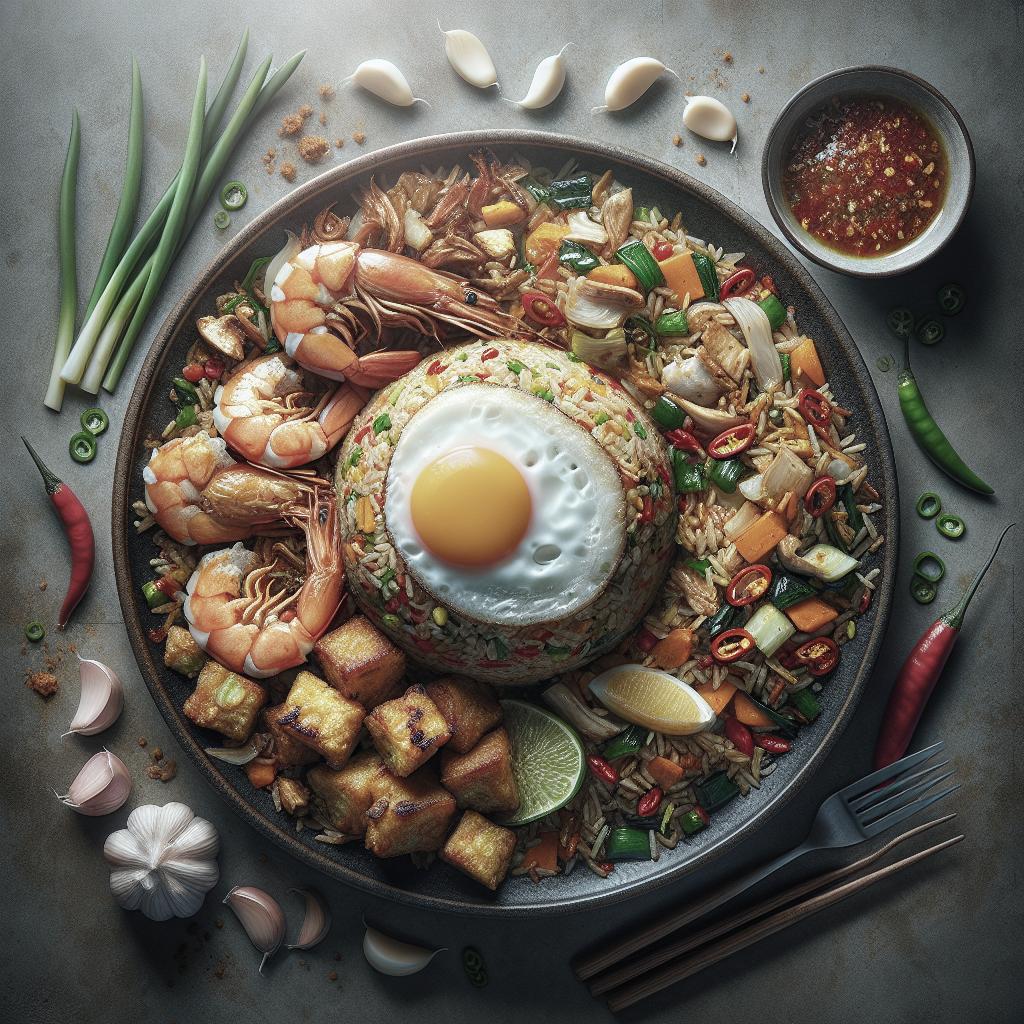
Serving Nasi Goreng can be as simple or elaborate as you desire. Traditionally, it’s presented with a fried egg on top, allowing the yolk to gently mingle with the rice, enhancing the dish’s richness. A side of crunchy prawn crackers or fresh cucumber slices can add a refreshing contrast.
For those entertaining guests, consider offering a variety of toppings and sides, such as sambal for added spice, fresh lime wedges, and extra kecap manis. The communal nature of assembling your own garnished plate encourages interaction and customization. Regardless of the setting, Nasi Goreng always brings people together with its inviting aroma and full-flavored profile.
Shrimp Paste is Optional!
While some traditional Nasi Goreng recipes call for a touch of shrimp paste, it’s entirely optional and dependent on personal preferences. Shrimp paste imparts a savory umami flavor that can deepen the overall taste, but it may not be suitable for everyone, especially those with seafood allergies.
If you’re new to using shrimp paste, introduce it sparingly to the dish to gauge your taste preference. For those seeking an alternative, substituting with other umami-rich ingredients like miso or soy sauce can mimic its flavor profile without overpowering the dish. Ultimately, your Nasi Goreng should reflect your taste and dietary needs.
Kecap Manis (Sweet Soy Sauce)
Kecap Manis is an essential component of Nasi Goreng, providing the dish’s characteristic sweetness and dark color. Unlike regular soy sauce, it is thicker, almost syrup-like, and is combined with palm sugar, giving it a distinct, molasses-like flavor.
If you find it difficult to locate this ingredient at your local store, consider making a homemade version by simmering soy sauce and brown sugar until it reaches the desired consistency. This ingredient is key to achieving an authetic flavor profile, ensuring your Nasi Goreng is nothing short of extraordinary.
Cold, Day Old Rice is Not Optional!
The use of cold, day-old rice is crucial to the success of Nasi Goreng. Freshly cooked rice tends to be too moist and clumps together, preventing the grains from frying to a crisp texture. By using chilled, day-old rice, the grains separate easily, achieving the signature consistency.
If you’re planning to make Nasi Goreng, cook your rice the day before and store it in the refrigerator. Not only does this step enhance the texture, but it also simplifies meal preparation. Embrace the concept of preparing elements in advance for a smoother cooking process.
Watch How to Make It
To truly master the art of Nasi Goreng, consider watching instructional videos that demonstrate the technique and finesse required to perfect this dish. Visual aids can bridge the gap between recipe and execution, offering insights that written instructions may not convey.
Observing an experienced cook can provide valuable tips and tricks, from perfecting your wok technique to adjusting seasonings. Seek out reputable culinary resources or online tutorials for a guided cooking experience that enhances your skill and confidence in the kitchen.
Life of Dozer
Cooking up a storm in the kitchen isn’t complete without the companionship of a furry friend. Meet Dozer, the ever-curious kitchen assistant who never misses a chance to be part of the culinary action. Whether it’s enjoying the aroma or hoping for a taste, Dozer brings a sense of joy and warmth.
As you prepare your own Nasi Goreng, don’t forget to share a moment with your own “Dozer” and cherish the company they provide. After all, cooking is as much about the experience and memories created as it is about the delicious meal at the end. Embrace the chaos, enjoy the process, and indulge in the final creation with a wagging tail or two by your side.
Lessons Learned
| Aspect | Key Insights |
|---|---|
| Nasi Goreng Essentials | Balance of sweet, salty, and umami flavors with a focus on cold, day-old rice for texture. |
| Preparation Time | A quick 20-minute meal when ingredients are prepped and ready in advance. |
| Ingredient Flexibility | Adapt recipe based on dietary needs, with options for proteins and optional ingredients like shrimp paste. |
| Serving Suggestions | Traditionally served with a fried egg, cucumber slices, and prawn crackers. Optional additions: sambal, lime. |