Gluten Free Vegan Naan

12

get-attachment-7.aspx

Gluten Free Vegan Naan

Makes 4

Prep time: 2 ½ hours

Cook time: 16 minutes

It’s Oscar Night tonight, and I’m sure many of you will be eating dips and spreads, while you spend hours in front of the television.  These traditional Indian flatbreads are the perfect accompaniment to legume dishes.  They are great for scooping a bean dip, soup or stew, and equally delicious with curry, or even as a wrap.  In my house, they get eaten before they get paired with anything.  They are that good. (more…)

Quinoa Cuisine Cookbook Giveaway and Review

1

When I got the email asking me to review Quinoa Cuisine, I answered with a resounding “Yes!”. This was one of the few cookbooks I would be truly delighted to receive. I love quinoa. I love it’s nutty flavor, I love the way it pops/crunches slightly in the back of your mouth when you bite it, I love the way it pairs with just about everything, and I particularly love its nutritional profile. High protein, high fiber, and here’s a little neat bit of trivia; did you know that quinoa is actually a “pseudograin” related to beets, spinach and chard? Talk about the superfood posse! Quinoa is unarguably one of the best substitutes for grains, and in addition to the protein and fiber, is also rich in calcium, iron, potassium, B vitamins and Vitamin E. I’ve said it before, and I’ll say it again, in the words of my husband’s Grandma Lily, “WCBB?” (“What could be bad?”)

More good news: I’m giving away a copy of this book.  To enter, go like me on my facebook page (if you haven’t already) and leave me a comment on the wall, letting me know how you like to eat quinoa, or how you would like to in the future. Again, you need to like my facebook page, if you haven’t already, here). I will enter you into the drawing to win a copy of this lovely book.  I will also share everyone’s comments once the drawing has closed, next Thursday, May 17th. So that’s how it works. If you like me, I might be able to give you something, if the fates are in your corner. Seems a little crass! Apologies, apologies….

But I think you’ll want to take a chance on this.  This book is the first of its kind.  “Quinoa Cuisine” is packed with 150 creative, mouthwatering recipes for breakfast to dessert and all the potlucks and picnics in-between.  I was particularly excited to see that authors, Jessica Harlan and Kelley Sparwasser use quinoa in all its various forms, from quinoa flour, to the many different colors of quinoa, to quinoa flakes.   And it’s really nice to have the healthy addition of quinoa many places you’d never expect it.  For example, in hummus (see recipe below), Thai Summer Rolls, White Bean Dip, Quinoa Frying Batter, Creamed Spinach, and Quinoa Pizza Dough.

These recipes are expertly written.  When I said “yes” to reviewing the book, I didn’t realize it was co-authored by Jessica Harlan, whom I used to work with at Lime.com (now Gaiam).  I have long admired her healthy and delicious recipes. She’s always been a proponent of healthy eating without sacrificing a bit of taste.

While this cookbook is not top-8-free, nor is it exclusively a gluten-free cookbook, if you have flexibility in your diet, and want to bump up your choices and pack in some extra nutrition, this is a great addition to your cookbook library.  I pulled a couple of the top-8-free recipes from the book to share with you below, and there are many others that I will certainly be adapting. In particular, the Quinoa Carrot Cake with Maple Cream Cheese Frosting, p.168.  Definitely next on my list.  Bravo to the chefs for taking quinoa to the next level.   Read on for two of my favorite picks from the book.


Hummus

This back-to-basics Mediterranean spread can be used as a dip or on sandwiches. Vary the recipe by adding roasted red peppers, kalamata olives, feta cheese, or almost anything you please. The quinoa flakes add a pleasing nuttiness and enhance the silky-smooth texture of the hummus.

Makes 2½ Cups

30 Mins or Less, Gluten-Free, Good for Company, Healthy Choice, Kid Friendly, Vegan


½ cup quinoa flakes

½ cup vegetable stock or broth

1 (15-ounce) can chickpeas, drained and rinsed

2 medium cloves garlic, minced

¼ cup tahini

3 tablespoons fresh lemon juice

¼ teaspoon ground cumin

½ teaspoon kosher salt

¼ teaspoon black pepper

3 tablespoons extra-virgin olive oil, divided

¼ teaspoon paprika


1. In a small bowl, cover the quinoa flakes with the vegetable stock or broth. Let sit for 2 minutes until the flakes are softened.


2. Place the soaked quinoa flakes, the chickpeas, and the garlic in the bowl of a food processor and process until smooth, about 1 minute. Add the tahini, lemon juice, cumin, salt, pepper, and 2 tablespoons of the olive oil. Process until combined, about 45 seconds. Taste and adjust the seasoning with salt and pepper, as needed. Transfer to a serving bowl and top with the remaining 1 tablespoon olive oil and the paprika.


Grapefruit, Pomegranate, Avocado, and Black Quinoa Salad

The vibrant colors of this salad really pop against the black quinoa, making for a gorgeous presentation.

Serves 6 to 8

Gluten-Free, Good for Company, Healthy Choice, Vegetarian


⅔ cup black quinoa, rinsed

1⅓ cups water

1 large grapefruit, segmented, juice reserved (see sidebar)

1 teaspoon honey

1 teaspoon Campari

2 tablespoons extra-virgin olive oil

1¼ cups pomegranate seeds

1 tablespoon minced fresh mint

1 avocado, pitted, peeled, and diced

kosher salt and black pepper


1. In a medium saucepan over high heat, bring the quinoa and water to a boil. Reduce the heat to low, cover, and cook until the water has been absorbed and the quinoa is tender, 18 to 20 minutes. Turn off the heat and let the quinoa sit for 5 minutes. Fluff with a fork and allow to cool.


2. Place the grapefruit segments in a medium bowl. In a small bowl, whisk together the grapefruit juice, honey, and Campari. Slowly add the olive oil while continually whisking to emulsify the dressing. Season with a pinch of kosher salt.


3. Add the cooked quinoa, pomegranate seeds, and dressing to the grapefruit slices, and stir to combine. Using a rubber spatula, fold in the mint and avocado. Season to taste with additional salt and pepper, as needed. Serve chilled or at room temperature.


To segment citrus fruit

Use a serrated knife to cut the top and bottom off the fruit, just exposing the flesh. Place the fruit with one of the flat sides resting on your work surface and follow the curve of the side from top to bottom to slice off the peel where the pith and the flesh meet. Working over a bowl to catch the juice, use a sharp paring knife to carefully cut along the membrane to free the segments. After all the segments have been removed, squeeze the remaining juice from the peel and membranes.

Allergy Free Hollandaise Sauce

17


With asparagus season in full swing and artichoke season rolling in, I figured it was the perfect time to roll out a safe allergy-free hollandaise sauce.

Hollandaise is traditionally made with eggs, one of the top eight food allergens. To replace eggs, vegan versions of the classic sauce usually rely on silken tofu. However, soy (silken tofu) is also one of the top eight food allergens. So I had to put on my thinking cap.

I replaced the eggs and/or silken tofu with a rice milk and olive and canola oil emulsion and added a smidgen of turmeric and a little nutritional yeast for the lovely buttercup hue, and also a flavor boost. And, of course, I used lemon juice, since that zip of acidity is the backbone of all hollandaise sauces.

Bonus: this one is vegan, too, so there’s no salmonella risk. Additionally, unlike traditional hollandaise, it can be made in advance, and keeps well for several days, covered in the fridge. Just bring to room temperature before serving.

Remember when you make this, slow and steady wins the race. Add the oil a little at a time to achieve the creamiest end result. (more…)

Allergy Free Potato Leek Kugel for Passover

9


Kugel (Yiddish for pudding) can be sweet or savory, made with a combination of egg noodles, cheese, potatoes, apples, carrots, sweet potatoes, and, during Passover, often matzoh meal. No matter the taste profile, Kugel usually contains eggs and gluten. I wanted to avoid both. So I took on the challenge of creating a gluten-free, dairy-free, soy-free Kugel recipe. (more…)

Gluten Free Pot Stickers for Chinese New Year

14


In honor of Chinese New Year 2012, I thought I’d finally post this glorious recipe for Gluten-Free Gingery Pork Pot Stickers from Laura B. Russell’s new cookbook, The Gluten-Free Asian Kitchen: Recipes for Noodles, Dumplings, Sauces, and More, from Ten Speed Press(my publisher too!)  I’ve had this book for several months, but in my own crazy  frenzy to finish up my new cookbook, I haven’t had a chance to crack open anyone else’s, much less, try their recipes.   Until now.  And let me tell you how excited I am to get started cooking my way through this book.

First of all, I don’t often have serious cravings, but when I do, they are for Asian food. But so much of Asian cuisine is off limits to me, between my wheat allergy, my shellfish allergy, my fish allergy, and my tree nut allergy.  Gluten-free Asian food is often very hard to find, even if you can work your way around the other ingredients. Which makes this cookbook so special.  Laura’s beautiful collection is the first gluten-free cookbook to focus exclusively on Asian cuisine, highlighting the delacacies of China, Japan, Korea, Thailand, and Vietnam.

Of particular note in The Gluten-Free Asian Kitchen is the helpful “Identifying Gluten Section”, which walks you through all the places you might find gluten hiding in your Asian food.  There is also a comprehensive sauce section, a really good guide to stocking your pantry, and one gorgeous photograph after another (styled by the brilliant Karen Shinto, who also styles my cookbooks).  I can’t wait to try the Porcupine Balls (p.48), the Red Curry Soup with Chicken and Rice Noodles (p.87), and the Yakuza Cucumber and Avocado Salad (p.119).  Literally, every page has me drooling.

A note to the soy allergic: this book is not for you. All others, I’m pretty sure you’ll be able to find many exciting new recipes, that have heretofore been off limits to you.  Thank you, Laura, for writing such a lovely book!


Gingery Pork Pot Stickers

makes 28 dumplings


1/2 cup tapioca flour (also called tapioca starch)

1/2 cup millet flour

1/2 cup sweet rice flour, plus plenty more for rolling out the dough

11/2 teaspoons xanthan gum

3/4 teaspoon salt, divided

1/2 cup boiling water

2 tablespoons cold water

3/4 pound ground pork

3 green onions, white and green parts, minced

1 tablespoon minced fresh ginger

2 teaspoons soy sauce or tamari GF

1/2 teaspoon toasted sesame oil

1/4 teaspoon freshly ground black pepper

3 tablespoons vegetable oil, divided

Soy Vinegar Dipping Sauce ?(page 26), for serving


To make the dough, stir together the tapioca flour, millet flour, sweet rice flour, xanthan gum, and 1/2 teaspoon salt in a bowl. Add the just-boiled water and stir with a fork to combine. Add the cold water and mix well until a dough starts to form. Use your hands to knead the dough together a few times—you can do this right in the bowl—and then form the dough into two balls. Transfer the dough to a large resealable bag until ready to use, up to several hours.

In a second bowl, combine the raw pork, green onions, ginger, soy sauce, sesame oil, remaining 1/4 teaspoon salt, and pepper. Mix well to combine.

To form the dumplings, dust your hands, the counter, and a baking sheet with sweet rice flour. Roll one piece of the dough into a long rope, about 3/4 inch thick. Cut the dough into 14 pieces and put them back into the resealable bag. Repeat with the other ball of dough for a total of 28 pieces. The dough will dry out quickly; make sure it stays covered.

Keep plenty of sweet rice flour nearby (up to 1/2 cup) for dusting the counter and the rolling pin to prevent the dough from sticking. Working with one piece of dough at a time, flatten the dough into a circle with the heel of your hand. Using a small rolling pin—a small dowel works best—roll the dough into a 3- to 31/2-inch circle, turning the dough periodically to prevent sticking. (Alternately, put the dough between two pieces of plastic wrap and roll it into a circle.) Transfer the dumpling wrappers to the prepared baking sheet. Repeat with the remaining dough. (If you run out of space on the baking sheet, make a second layer separated by plastic wrap.)

Dust a dinner plate with sweet rice flour. Spoon a scant tablespoon of filling into the center of each wrapper. Dip two fingers in a small bowl of water and run them around half the circumference of each circle. (This is so the wet side can stick to the dry side.) Lift the sides, forming a half-moon shape around the filling; keep the bottom flat against your hand or the counter. Pinch the dough together at the top and then form two or three pleats along each side; press to seal. (Alternatively, if you have a dumpling press, use it to form and seal the dumplings.) Transfer the dumplings to the prepared plate. Cover tightly with plastic wrap and refrigerate until ready to cook, up to 4 hours ahead.

In a large nonstick frying pan, heat 11/2 tablespoons of the oil over medium-high heat. Add half the dumplings to the pan and cook until browned on the bottom, 2 to 3 minutes. Holding the pan lid in one hand (to control splattering), add ?1/3 cup water to the pan and immediately cover it. Lower the heat to low and steam the dumplings until cooked through, ?8 to 10 minutes. Remove the lid and raise the heat to medium. Cook until the water evaporates and the bottoms of the dumplings are well browned, about 2 minutes longer. Repeat with the remaining dumplings and oil. Serve hot with the dipping sauce or a bowl of soy sauce GF.

Note: If you do not plan on eating the dumplings all at once (reheating them is fine, not great), freeze some of the uncooked dumplings for later. Freeze the dumplings on a plate or tray before transferring them to a freezer bag to keep them from sticking together. Add the dumplings to the pan straight from the freezer and increase the steaming time by 2 minutes.

heads up

The dish calls for Soy Vinegar Dipping Sauce. You can prepare it up to 1 week ahead.

Soy Vinegar Dipping Sauce

makes about 1/2 cup

1/4 cup soy sauce or tamari GF

3 tablespoons unseasoned rice vinegar

11/2 teaspoons sugar

1 teaspoon toasted sesame oil

2–3 slices fresh jalapeño, or large pinch of red pepper flakes (optional)


Stir together all the ingredients in a small serving bowl. The dipping sauce will keep, covered, in the refrigerator for about 1 week with fresh jalapeño or 2 weeks with red pepper flakes.

Reprinted with permission from The Gluten-Free Asian Kitchen: Recipes for Noodles, Dumplings, Sauces, and More. Copyright © 2011 by Laura B. Russell. Published by Celestial Arts, an imprint of Ten Speed Press and the Crown Publishing Group, Berkeley, CA. Photo Credit: Leo Gong.


How to make Sunflower Yogurt

9

I learned more working on this allergy-friendly Sunflower Yogurt recipe than any other recipe so far. It’s been kind of thrilling working through the obstacles (see last post ), and I’m so happy to have learned a new skill. I’m a perpetual student (I spent 22 years in school), and the kitchen continues to be my learning ground. In fact, I call it my chemistry lab.

The finished product: Vegan, Dairy-free, Soy-free and Nut-free Sunflower Seed Milk Yogurt.

Making homemade Dairy-free, Soy-free, Nut-free yogurt was no simple task (particularly since I don’t own a yogurt maker, but I figured, “Who does?” and forged ahead.) This recipe took no less than 10 attempts to get right. It challenged me to think in new ways, and the end result is a new concept in yogurt. Seed Milk Yogurt! Packed with protein, vitamin E, and good-for-you bacteria, all without any common allergens — this might just be a new superfood!

(more…)

How to make Sunflower Milk

17

This recipe for Sunflower Milk is the first installment in my homemade Sunflower Yogurt recipe, which will be up next.  Gotta make the milk first, to get to the yogurt! These recipes were developed in response to a reader request for a homemade dairy-free, soy-free, nut-free yogurt recipe.

I first tried making rice milk yogurt with store-bought rice milk. No go. I tried store-bought rice milk with hemp seeds added (yogurt seems to need protein and carbohydrates to grow). That worked a tiny bit, but tasted gross. Then I tried rice milk with a little rice protein powder added. It tasted like, well… like protein powder, and it didn’t really thicken. I tried using coconut milk. Again it didn’t work. I tried using hemp milk.  Nope. And then, I finally realized that most of the vegan yogurt recipes out there rely on homemade cashew milk. Great… except, I can’t use nuts. This is an allergy-friendly recipe.

So this left me back at the drawing board. Until I realized, I could make my own seed milk. Sunflower seeds, and pumpkin seeds are both mild, and protein rich. One of the two just might work.  So, I set about making homemade seed milk. Read on below to learn how to make your own Sunflower Seed Milk and come back next week to get the recipe for yogurt!

(more…)

Gluten Free Flour Tortillas

28

If you’re looking for a great vegan Gluten-Free flour tortilla recipe, that doesn’t crack, with great wholesome flavor, then look no further! These also freeze really well, so make up a big batch, freeze the extra, and defrost on demand with 20 seconds in the microwave.

Also, just a reminder that I’ll be teaching “Comfort Foods to Warm Your Soul” on Saturday at the Gluten and Allergen-Free Expo in Chicago, and signing copies of The Allergen-Free Baker’s Handbook, both Saturday and Sunday at the Vendor Fair. See here for more info, and come take my class! Learn how to whip up Gluten-Free, Allergen-Free Red Velvet Cake and Old-Fashioned Mac n’ Cheese!

(more…)

Allergy Free Thanksgiving Tips and Recipes

16

Delicious, Allergen-Free Turkey Day

On Thanksgiving, we gather and we eat for upwards of four hours, all the way from pre-dinner snacks to post-dessert dessert. But a traditional Thanksgiving dinner is literally one of the most allergen-laden meals possible.Whether this is your first allergen-free Thanksgiving or your twentieth, the following tips will help make it festive, mouthwateringly delicious, and safe.

Talking Turkey:

Did you know that many fresh and frozen turkeys contain hidden allergens? Most conventional, “self-basted” turkeys have been injected with butter, water and salt, and may also contain gluten. If you’re going to go the conventional turkey route, always verify ingredients with the manufacturer before purchasing. A safer option is a “Natural” turkey, which hasn’t been treated with any artificial colors or flavor enhancing ingredients. Look for “Organic” natural turkeys at websites like Local Harvest, or stores like Whole Foods.

Another good option: natural “Kosher” turkey. Guaranteed to have no dairy injected, the benefit of a Kosher turkey is that it has already been salted, and thus doesn’t need brining. I recommend Empire, the taste test winner selected by Cook’s Illustrated Magazine. Empire turkeys are also gluten-free. If you’re a die-hard foodie, take the adventurous (albeit, most expensive) route and look for a “Heritage” turkey, which is one of the pre-World War II breeds of turkey, like Narragansett and Bourbon Red. Slow Food has a great listing of independent farmers raising Heritage turkeys, state by state. Looking for something similar to what our forefathers might have eaten? Save yourself the hunt, check out D’Artagnan, to purchase a wild bird.

Last, to keep your turkey allergen-free, baste with olive oil. There is no need for butter, and in fact I prefer turkey with olive oil.

Savory Side Dishes:

Make baked sweet potato and potato dishes using canola oil instead of butter, and orange juice or rice milk instead of milk or cream. I prefer yams/sweet potatoes without marshmallows, but if like them, look for Allerenergy marshmallows, or try vegan brands like VeganSweets, made without eggs or gelatin, but be forewarned that they contain the allergen SOY. Instead of plain rice, mix and match with old world gluten-free grains like quinoa, millet, brown rice, wild rice, and buckwheat. All of these combine well with legumes like lentils or chickpeas, and are wonderful when enhanced with fresh herbs like thyme and sage. Dip into the plentiful array of winter squash available this time of year–not just butternut and acorn, but delicata, red kuri, and sweet dumplings.

Gravy can be made with olive oil instead of butter, and alternate flours, such as brown rice flour for thickening, instead of traditional wheat flour. See my recipe for Allergy-Friendly Gravy below.

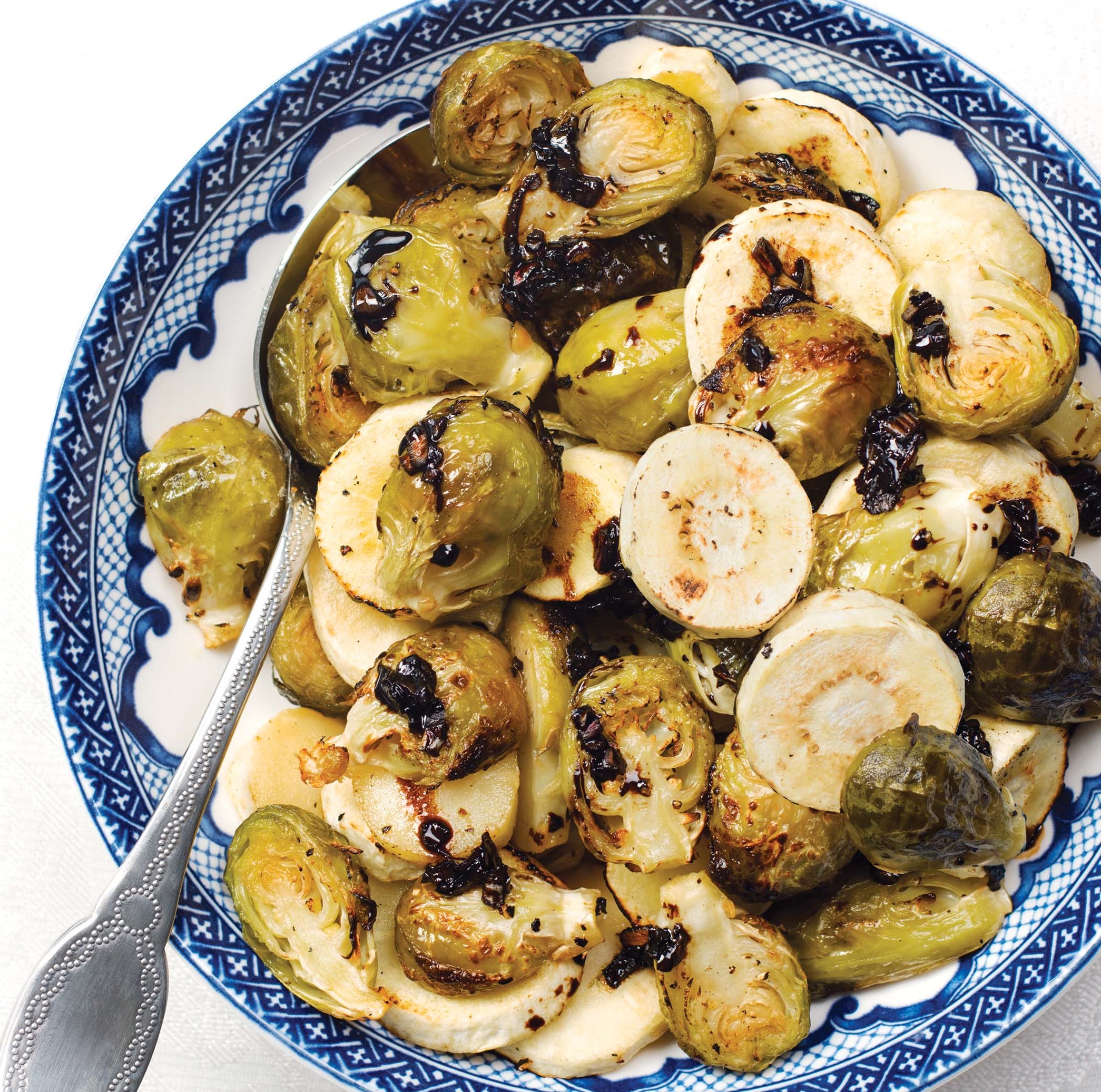
Try making roast brussel sprouts this year instead of drenching them in butter or hollandaise sauce. To roast, cook at 450 degrees on a baking tray, tossed in olive oil and sprinkled with kosher salt and pepper, for 25 minutes, shaking once or twice until a crispy golden brown on the outside, and tender on the inside.

For cranberry sauce, omit walnuts (tree nuts), and use thinly sliced tangerines or mandarin oranges, keeping the rind on, to add texture and color.

For Pie, check out my cookbook, The Allergen-Free Baker’s Handbook for any number of wonderful allergen-free pie, crumble, and crisp recipes, from Pumpkin Pie, to Apple Cranberry Pie. Or see my new Allergy-Friendly Sweet Potato Pie recipe.

Remember: if you’re only doing a few allergen-free dishes rather than a whole allergy-friendly meal, be aware of cross contamination and cross contact while cooking and serving. Consider labeling dishes with ingredient cards. If the meal is going to be served buffet-style, serve the food allergic person first to avoid cross contamination.

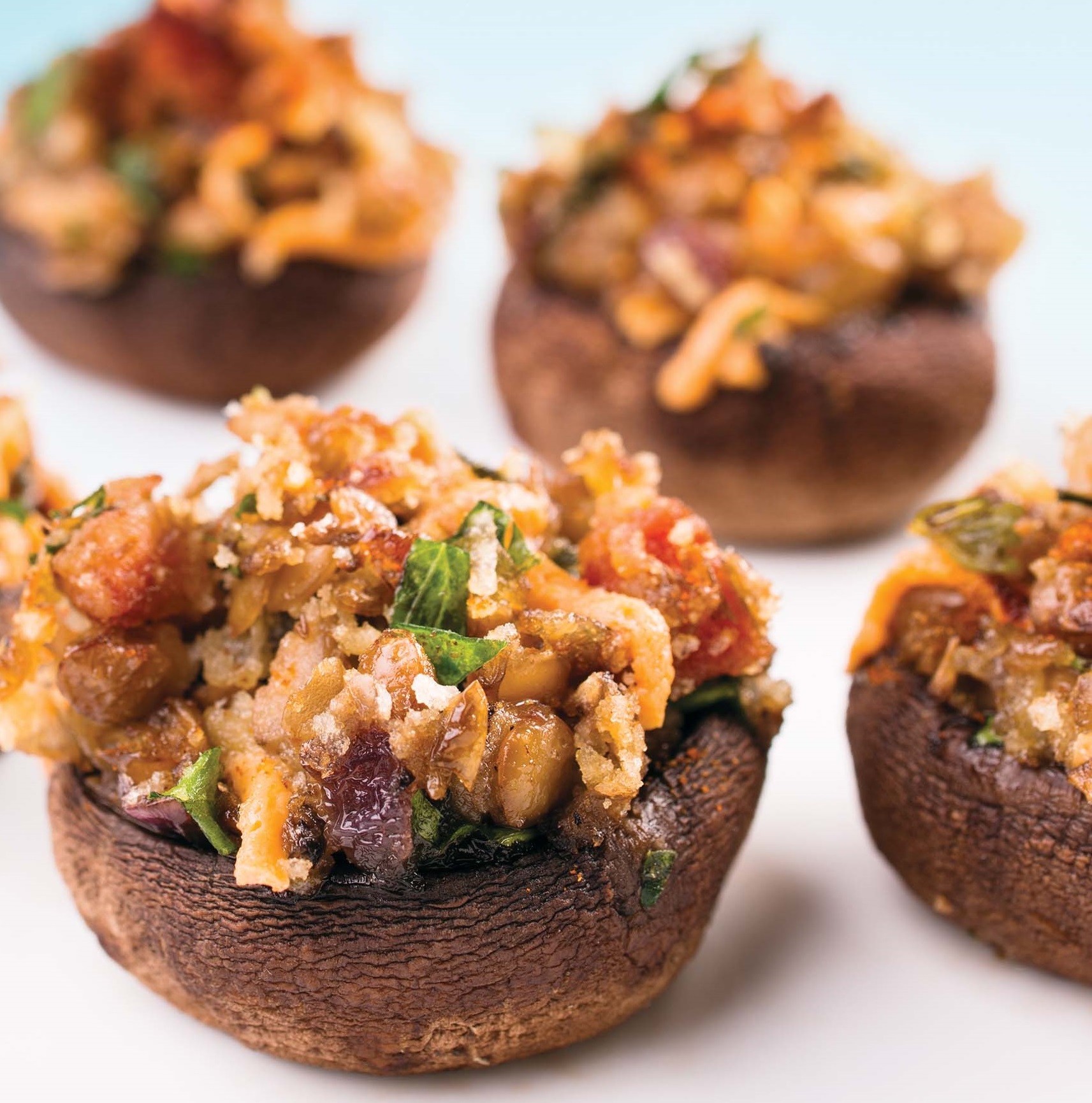
Allergy-Friendly (Gluten-Free) Cornbread and Wild Mushroom Stuffing

Serves 4-6.

This stuffing can be made vegan or non-vegan, depending on personal preference. Either way, it is rich-tasting, exotic, healthy, and delicious.

  • 3 cups allergen-free cornbread (my recipe follows), preferably stale so it’s dried out a bit
  • 1/2 cup diced nitrite-free pancetta (optional, omit if making vegan — otherwise, look for artisanal brands at stores like Whole Foods)
  • 4 Tbsp. olive oil
  • 5 large shallots (both halves), minced fine
  • 2 large stalks celery, chopped into 1/4-inch pieces
  • 1/2 lb. wild mushrooms (I like shiitake, but you could also use chanterelles or morels, quartered, or cut into eighths if very large)
  • 1 tsp. fresh thyme, chopped
  • 1 tsp. fresh rosemary, chopped
  • 1/4 tsp. kosher salt
  • 1/4 tsp. pepper
  • 1/4 cup white wine
  • 1/4 cup rice milk
  • 1/3 cup chicken broth (or vegetable broth if making vegan — Kitchen Basics is Allergen-Free

1. Preheat oven to 350 degrees. Cut cornbread into 1-inch-thick slices and place on baking sheet. Bake until golden brown and dried out a bit, about 10-15 minutes, turning the slices once. Keep a close eye on it, because you don’t want it to burn. Remove from oven and let cool.

2. Heat a heavy skillet over medium-high heat. Once pan is really hot, add the pancetta and cook until crispy.Remove pancetta from pan and set aside. (Skip this step if making vegan).

3. Add olive oil to skillet, then shallots and celery. Cook, stirring occasionally, until soft, about 3 minutes. Add the mushrooms, thyme, rosemary, salt and pepper. Cook, stirring occasionally, until slightly soft, about 4 minutes. Add white wine and cook, stirring until it’s been absorbed, about 1 or 2 minutes. Add rice milk and cook about 1 minute more. Remove pan from heat.

4. Crumble the cornbread and measure out 3 heaping cups. Add to the pan. Add the crispy pancetta bits (if using). Toss gently. Oil a 9×13-inch pan (or whatever you’ve got that’s comparable) with olive oil. Spoon in the stuffing and drizzle with chicken broth or vegetable broth. Bake at 350 degrees until crusty and golden brown, about 30 minutes.

Allergy-Friendly Cornbread and Wild Mushroom Stuffing
© 2010 by Cybele Pascal

Allergy-Friendly (Gluten-Free) Skillet Cornbread

Serves 8

Cooking cornbread in a hot cast iron skillet gives it that coveted crust on the outside. This cornbread tastes just like my Southern grandmothers’, but it’s vegan, allergen-free, and gluten-free! Make it for the holidays, or any old time!

1. Preheat oven to 400 degrees. Preheat the pan, along with your oven, this will give you a nice crust. I use a 10-inch cast iron skillet (the traditional way), but you may also use a similarly sized baking pan, square or round, it doesn’t matter.

2. Combine flour mix, cornmeal, xanthan gum, salt, baking powder, and baking soda.

3. Combine rice milk, lemon juice, and honey. Whisk well. Set aside for 10 minutes. Combine egg replacer with rice milk. Add rice milk/lemon juice mixture to flour mixture, along with egg replacer and canola oil. Beat until smooth.

4. Remove hot pan from oven and quickly spray with canola oil spray or other oil of choice. Pour in batter and set pan in center of oven. Bake 25 minutes at 400 degrees, then turn heat down to 300 degrees and bake another 10 minutes or so until set in the center. Remove from oven. Let cool about 15 minutes before slicing into squares or pie-shaped wedges.

Allergy-Friendly Skillet Cornbread
© 2010 by Cybele Pascal

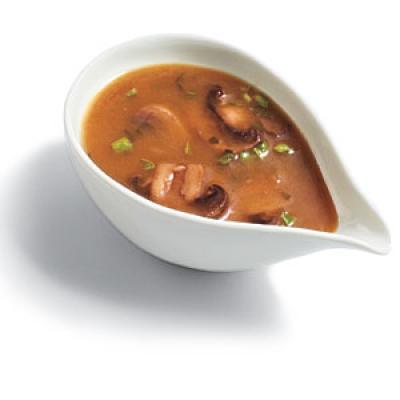
Allergy-Friendly (Gluten-Free) Creamy Gravy

Makes 1 1/4 cups

Gravy is one of those things that everybody loves. Even the thought of gravy can make you smile. In fact, the term gravy, in slang, means happiness, stable goodness, and a state of complacency.Gravy also means cool, okay, and all good, as in “It’s all gravy, baby”. If something is better than gravy, it’s gravy on eggos or gravy on rice. Who doesn’t want some of that coolness poured onto their plate?

But beloved gravy is also highly allergenic. Yup, it’s loaded with no-nos for those with food allergies. Butter (dairy), wheat (gluten), and cream/milk (dairy again). It’s also often chock-full of soy derivatives.So I took on the challenge to convert beloved gravy into something allergy-friendly. Just pour this yummy goodness over rice, potatoes, turkey breast, or do like me, and eat it with a spoon!

Ingredients:

  • 1/4 cup canola oil
  • 14 cup fine brown rice flour
  • 1/8 teaspoon onion powder
  • pinch of dried thyme
  • pinch of cayenne pepper
  • salt and freshly ground pepper
  • 1 cup warm beef (or chicken or turkey) broth or stock (Kitchen Basics is allergy-friendly)
  • 1/2 cup warm rice milk

1. Heat canola oil in heavy pot over medium-high heat.

2. Add brown rice flour, 1 tablespoon at a time, and cook, stirring constantly with a wooden spoon, 2 minutes, until golden and aromatic.

3. Add onion powder, pinch of thyme, pinch of cayenne pepper, pinch of salt, and a couple turns of freshly ground pepper. Cook about 1 minute more, stirring.

4. Reduce heat to medium. Using a whisk, whisk in the warm beef broth, in three batches. Whisk vigorously, to smooth out any lumps. Add warm rice milk, whisking, and bring to a simmer. Cook stirring often, until thick and creamy. Adjust salt and pepper to taste. Serve warm.

Allergy-Friendly, Gluten-Free Creamy Gravy
© 2010 by Cybele Pascal

(Please note that all my recipes are completely free of all top allergens (wheat, dairy, soy, eggs, peanuts, tree nuts, sesame, fish, shellfish, and gluten), so as many people as possible can enjoy them. Additionally, all the ingredients are available at Whole Foods, and online at Amazon.com. If you have trouble finding something, let me know and I’ll help you find it.)

SAFETY NOTE: Because each person’s food sensitivity and reaction is unique, ranging from mild intolerance to life-threatening and severe food allergies, it is up to the consumer to monitor ingredients and manufacturing conditions. If manufacturing conditions, potential cross contact between foods, and ingredient derivatives pose a risk for you, please re-read all food labels and call the manufacturer to confirm potential allergen concerns beforeconsumption. Ingredients and manufacturing practices can change overnight and without warning.

-->